
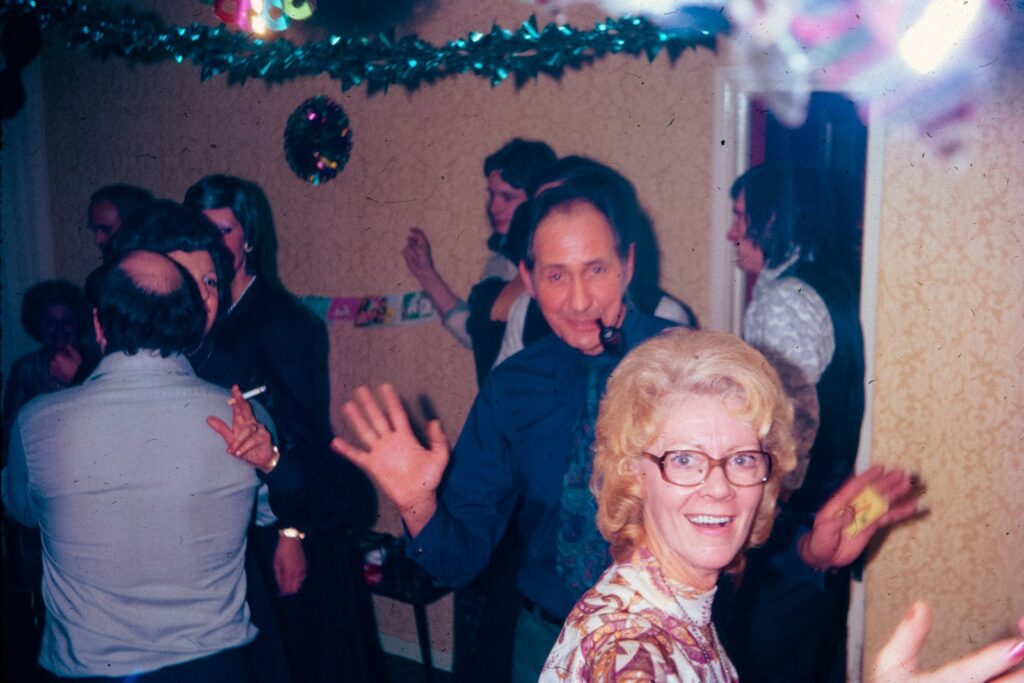
Every year, families come together to celebrate life’s biggest milestones. Weddings put several generations under one roof. Reunions reconnect relatives who may not have seen each other in years. Holidays, birthdays, graduations, anniversaries, and retirement parties all create moments families want to remember.
Naturally, we document them. The phones come out, the photos and videos pile up, and the posts go up on social media. By the end of the day there may be hundreds or even thousands of captured moments. And yet, with all that documentation, families often miss one of the best opportunities these gatherings offer: saving the stories behind the moments.
At MiMir, we think family gatherings are about much more than photographs. They’re a chance to capture the experiences, perspectives, and personal stories that give those pictures meaning.
What a Photo Can’t Tell You
Recording our lives has never been easier. A wedding can produce thousands of photos from the photographer, the family, and the guests. A reunion often ends with a shared online album full of smiling faces and candid shots, and holiday celebrations turn into social media memories that resurface years later.
Those images are valuable, but they rarely tell the whole story. A photo can show a grandmother sitting with her grandchildren, but not the childhood memory she was sharing just before it was taken. A wedding photo can capture a father walking his daughter down the aisle, but not what was going through his mind in those last emotional steps. A reunion picture can show dozens of relatives together, but not the history, traditions, and experiences that brought them all to that spot.
The picture shows what happened. The story explains why it mattered.
The Stories That Come Out Naturally
One of the remarkable things about family gatherings is how easily the stories start flowing. People relax, familiar faces jog old memories, and conversations drift toward childhood adventures, family traditions, career paths, and lessons learned over decades. A grandparent starts describing what it was like to grow up in a very different era. An aunt brings up a family vacation everyone had nearly forgotten. Parents tell stories their kids have never heard, and cousins laugh about the experiences that shaped them.
Those moments are spontaneous and over quickly. Everyone listens, laughs, and moves on to the next topic, and hardly anyone stops to realize that a piece of family history was just shared in real time. Years later, people may remember that someone told a great story, but the details have gone fuzzy and the chance to preserve it has passed.
It’s one of the biggest missed opportunities at any family gathering. We’re so busy capturing how everyone looked that we forget to capture what they were saying, feeling, and remembering.
Living History, Shared Out Loud
In many ways, a family gathering is a living history session. We tend to think of history as something in textbooks or genealogy records, but family history gets shared every time relatives get together. Stories about immigration, military service, career changes, traditions, personal struggles, and defining moments pass from one generation to the next, and they provide context no photograph ever could.
Future generations may inherit albums full of names, dates, and faces, but without the stories, much of the meaning disappears. They may know who someone was without understanding what that person valued, struggled with, or learned, or how they helped shape the family that exists today.
The irony is that, with more ways to communicate than ever, many families are preserving less meaningful storytelling. Social media is great at sharing snapshots of life, but it was never designed to be a family archive. Posts get buried under newer ones, albums are hard to search, and important conversations end up scattered across comments, messages, and different platforms. Even when the photos survive, the stories behind them are often lost.
Too Much Content, Not Enough Context
Organization is another challenge. Most people have thousands of photos spread across phones, computers, cloud services, and social accounts. Videos sit in one place and written memories in another, so finding a specific memory from years ago can feel like looking for a needle in a haystack. The more we create, the harder it gets to find and revisit the moments that matter most.
What families need isn’t one more place to store photos. They need a place to keep the context: somewhere images, stories, voice recordings, and memories can live together, searchable, organized, and meaningful.
That’s where voice becomes especially powerful. A photo can show a smile; a voice recording captures a personality. It keeps the emotion, humor, wisdom, and perspective. Hearing a grandparent tell a story in their own words lets future generations experience that memory in a far more personal way, with the excitement, the laughter, the pauses, and the feeling that made the story special in the first place.
Build Your Family’s Story Library
The next family gathering is already on someone’s calendar: a wedding, a reunion, a holiday dinner, a birthday that ends with everyone still at the table long after the cake is gone. This time, when Grandpa starts the story about the summer he drove to California, or your aunt brings up the vacation everyone swears they’ve forgotten, take a minute to press record and attach it to the photos from that day. Ask the follow-up question. Let the cousins argue about how it really went.
Do that a few times and something changes. Your photos stop being a pile of faces and start becoming chapters, each with the voices that explain them. That’s what it means to build your family’s story library: not more pictures, but the stories that make the pictures matter, kept in one private place where the people you love can find them years from now and hear exactly how it was told.
Join the conversation