
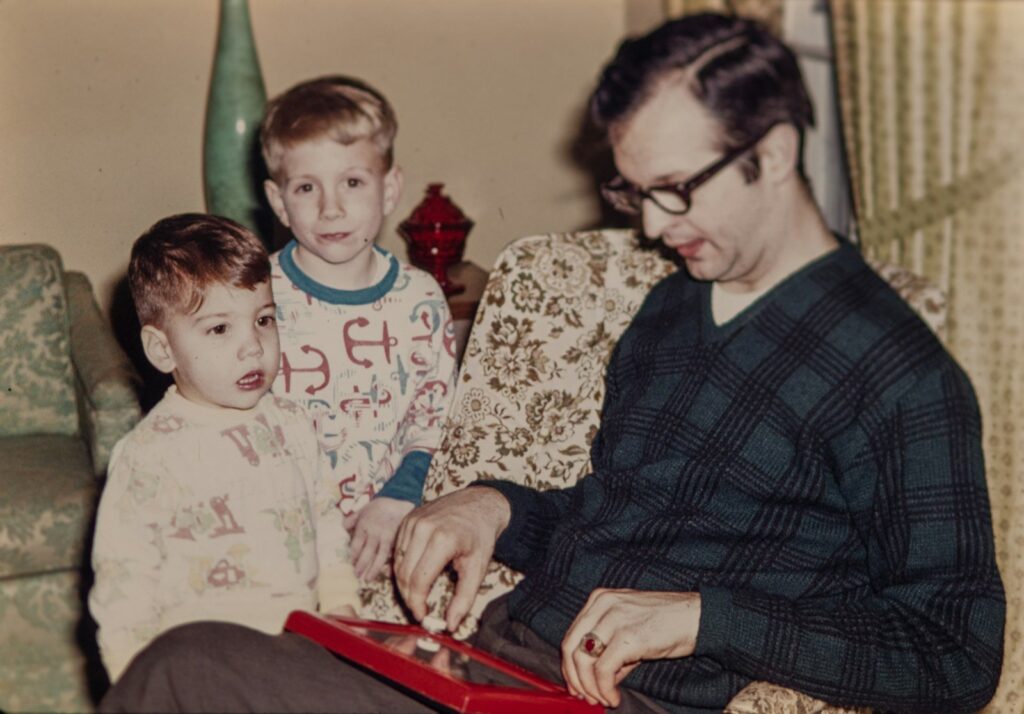
For a lot of families, memories live in fragments: a few old photographs in a shoebox, a handwritten recipe card stained from years of use, a story retold every holiday that everyone knows by heart. Those pieces matter, but they rarely tell the whole story of a person’s life. What tends to disappear are the details behind them, the emotions, the lessons, and the experiences that made someone who they were.
Most of us assume there will always be more time to ask: more dinners, more holidays, more chances to sit down and hear the stories nobody has told yet. Life moves quickly, though, and many stories vanish before anyone notices they were never recorded. That’s a big part of why family storytelling matters, and why at MiMir we believe preserving memories starts with something simple: asking questions while we still can.
Why So Many Family Stories Go Untold
Plenty of people would happily share their stories; they just don’t get asked. Others think their experiences are too ordinary to matter, or assume younger relatives wouldn’t care about their childhood, their struggles, their relationships, or what life taught them. In reality, those are often exactly the stories families treasure most later on.
A grandfather may never think to describe his first apartment after moving to a new country. A mother may not realize her stories about growing up with her siblings will mean so much to her children someday. A parent may forget to mention the fears, hopes, and excitement they felt before they became a parent themselves. Without intentional conversations, memories like these quietly fade.
That’s especially true now, when communication is faster but often less personal. Texts have replaced phone calls and social media updates have replaced long conversations. Families stay connected digitally while many meaningful stories go untold, and future generations end up inheriting photos and captions with very little of the emotion behind them.
Questions Create Connection
One good question can open up a whole world of memories. Questions invite reflection and nudge people back toward experiences they may not have thought about in years. Often, simply being listened to makes someone feel valued, understood, and remembered.
Questions like these can lead to powerful conversations:
- What was your childhood home like?
- What’s one memory you never want forgotten?
- What was your happiest moment growing up?
- What challenges shaped you the most?
- Which traditions mattered most in your family?
- What advice would you give future generations?
These aren’t interview prompts so much as invitations into someone’s inner world. When families ask thoughtful questions, they preserve more than stories. They preserve perspective, personality, emotion, and identity.
The Emotional Power of Hearing Someone Tell Their Story
Reading a story and hearing someone tell it in their own voice are two very different experiences. Voice carries emotion in ways written words often can’t. The tone, the pacing, the laughter, the pauses, even the silences all become part of the memory.
You can hear the excitement when someone remembers their first job, the tenderness when a parent describes the day their child was born, and the resilience in stories about hardship and change. Those details are what make a story feel alive.
That’s also why voice recordings become more meaningful with time. Long after a memory has faded, hearing someone speak can reconnect a family to a moment they thought was gone. Most people understand this instinctively. It’s why a saved voicemail becomes a treasured possession, and why an old recording can bring comfort years later. A voice makes someone present again.
Family History Is More Than Facts and Dates
Traditional family history tends to focus on names, dates, and major milestones. Those details are important, but they rarely capture who someone really was. Future generations usually want more than a genealogy chart. They want to know:
- What made their family laugh
- What challenges shaped earlier generations
- Which values mattered most
- How family traditions began
- What everyday life actually felt like
Those human details help younger generations feel connected to their roots and create emotional continuity between past and present. For children in particular, hearing family stories can strengthen their sense of identity and belonging. Researchers at Emory University found that teens who knew more stories about their extended family showed higher emotional well-being and a stronger sense of identity, even after accounting for how well their families functioned overall. Knowing where you come from seems to help you understand who you are.
Storytelling passes down more than information. It passes down meaning.
Why Everyday Stories Matter Most
Many people think they need extraordinary experiences to have stories worth saving. Often the most meaningful memories are the simplest: a father talking about summer road trips, a grandmother explaining how she learned to cook, a sibling remembering backyard games, a parent describing the first time they held their child.
Those moments can seem ordinary while they’re happening, but they become incredibly valuable over time. What people miss most after losing someone is rarely a dramatic event. It’s the everyday conversations, routines, and jokes that once felt insignificant, and that’s why ordinary stories are so worth preserving.
Technology Has Changed Storytelling
For centuries, storytelling was mostly oral. Families passed memories down in conversation, around the dinner table, at gatherings, or at bedtime. Later, journals, letters, photographs, and home videos let families keep pieces of their lives more permanently.
Today a smartphone lets us document almost everything instantly. Even so, many families are preserving less meaningful storytelling than they used to. Modern platforms reward quick content over deep reflection, so memories become short captions, disappearing stories, or uploads scattered across apps. Voice in particular has nearly vanished from the way we keep memories, and that matters, because voice is one of the most emotionally powerful parts of a story.
How MiMir Helps Families Preserve What Matters
We built MiMir to help families get back to meaningful storytelling in a modern way. It gives you a private place to record stories in voice, video, or text, so they can be organized, revisited, and shared across generations. Instead of losing stories in an endless camera roll or a forgotten social media post, families can deliberately keep the moments that matter most.
A simple recording today can become a treasured family memory years from now. Whether it’s a grandparent sharing life lessons, a parent documenting milestones, or siblings looking back on their childhood, MiMir helps turn everyday conversations into a lasting legacy.
The Best Time to Start Is Now
A lot of people put off saving family stories because they figure there will be time later. Storytelling doesn’t require perfect preparation, professional equipment, or a carefully planned interview, though. Some of the most meaningful recordings happen naturally in casual conversation. What matters is starting.
Ask questions, listen carefully, and record often. One day those conversations may be among the most valuable things your family owns.
In the end, stories aren’t just about the past. They’re about connection. They remind us who we are, where we came from, and what matters most, and sometimes the stories we almost forgot turn out to be the ones we treasure forever.
Join the conversation